Featured and Trending
HIPAA Compliant Answering Service: What to Know
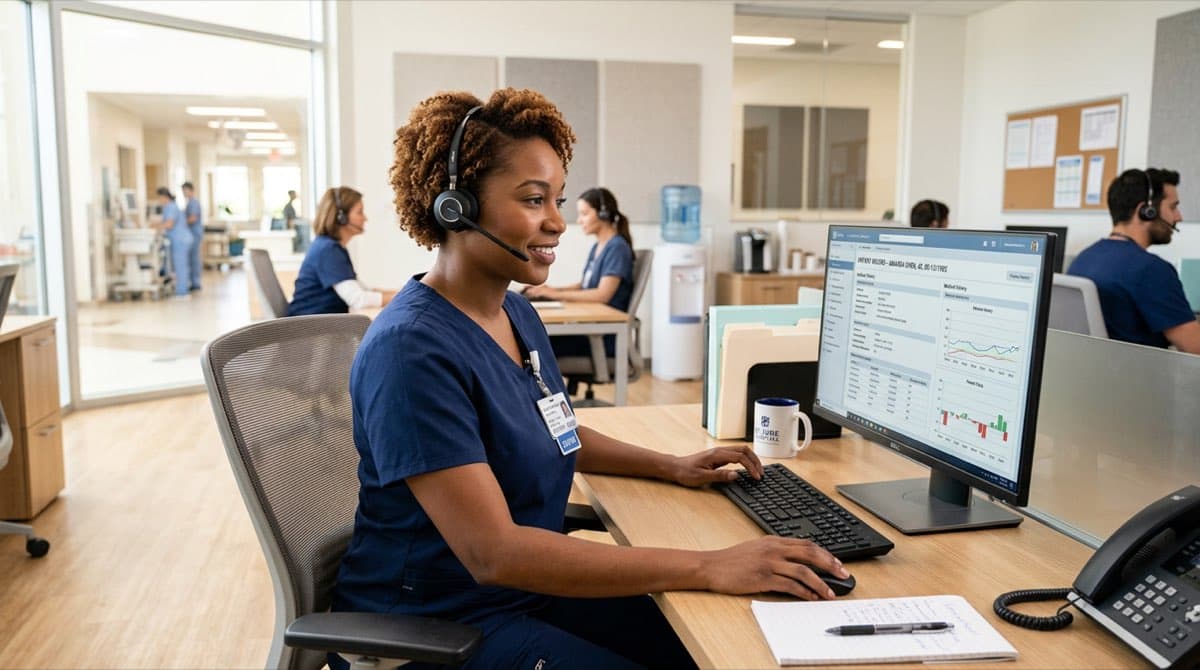
Most practices think their answering service meets HIPAA requirements once the vendor signs a Business Associate Agreement (BAA). However, the agreement alone doesn’t protect patient information. It doesn’t encrypt messages, train staff, or ensure agents understand medical calls. Practices that rely on paperwork alone may discover these gaps when a routine after-hours call goes wrong.
What Actually Makes an Answering Service HIPAA Compliant
A HIPAA-compliant answering service needs a signed BAA, encrypted communication channels, and a call process that collects only the information needed for a callback. Any vendor that handles patient messages, schedules appointments, or routes calls to clinical staff may qualify as a business associate under HIPAA.
The practice and vendor must sign the BAA before the vendor handles protected health information (PHI) on the practice’s behalf. The agreement should define each party’s responsibilities. However, a signed BAA alone cannot protect patient information or ensure staff handle calls correctly.
The Floor Isn’t the Same as the Person on the Line
Many answering services struggle with staff training and call handling, not paperwork. Shared call centers often assign whichever agent is available. These agents may lack familiarity with a practice’s patients, workflows, and escalation rules.
This creates several risks. Staff might send patient details through unsecured channels, collect more information than necessary, or fail to pass an urgent message to the right clinician. A signed BAA does not prevent these mistakes.
A HIPAA-compliant virtual receptionist needs proper training, clear procedures, and ongoing oversight. Practices should understand how a vendor protects patient information and prepares its staff before signing an agreement.
How Edge Builds Compliance Into Every Layer, Not Just the Contract
Edge signs a Business Associate Agreement at the company level with every medical practice it serves. Calls run through encrypted, HIPAA-grade connections within a secured Edge Campus that holds SOC 2 Type II and ISO 27001 certifications. Edge also provides the hardware its team members use, reducing the risks associated with personal devices and removable storage. That’s the infrastructure layer, and it matters. But it isn’t what actually sets Edge apart.
What sets Edge apart is who answers the phone. Every Edge Talent professional must complete Edge Edu before joining a client account. This certification program covers HIPAA, security, and role-specific workflows. Candidates must score at least 85% to pass, and approximately 96% do not make it through the program. Every Edge Talent member serving a medical practice completes HIPAA training before day one, rather than relying on a quick onboarding video.
At Saluja Medical Associates, every Edge team member assigned to the practice is a licensed physician or pharmacist, not a generalist reading from a script. That level of vetting helps distinguish Edge from call centers that rely on whoever is available for a shift.
dge supports medical practices with dedicated remote professionals, structured training, and security-focused infrastructure. Learn more about Edge’s healthcare staffing solutions for medical practices.
Dedicated Teams Support Consistent Call Handling
Continuity matters just as much as credentials. Edge assigns a dedicated team instead of a rotating pool. Team members learn the provider’s scheduling rules, communication preferences, and escalation procedures over time. This helps them handle calls consistently and understand which messages need immediate attention.
At CLS Health, Dr. Naureen Alim’s Edge team member works within a managed setup that includes HIPAA-compliant device provisioning, EMR configuration tailored to the practice, and ongoing compliance monitoring. The team member handles scheduling and call management as part of a broader support role.
At Saluja, the practice’s call answer rate rose from 75–80% to above 90%. The dedicated team became familiar with the practice and handled its daily call volume more consistently.
For the fuller picture of HIPAA compliance across scheduling, documentation, and device security, see our guide on ensuring HIPAA compliance with remote workers. This post focuses on the answering-service essentials: the BAA, the people, and the call itself.
Quick Reference: What a Compliant Answering Service Has in Place
- A signed Business Associate Agreement, completed before the vendor handles PHI on the practice’s behalf
- Encrypted voice and messaging channels that protect patient information, with appropriate safeguards for messages sent to providers
- Documented HIPAA training and role-specific certification for everyone who may answer a call, rather than a one-time onboarding video
- A call script that collects only the information needed for a callback, not a patient’s full history
- A dedicated team, rather than a rotating pool, so the same people learn the practice’s workflows and exceptions
The Bottom Line
The minimum requirements for a HIPAA-compliant answering service include a signed BAA, secure communication channels, and a disciplined call script. However, paperwork alone cannot guarantee that a vendor protects patient information.
What’s harder to find is a team that understands the practice’s needs and handles calls appropriately. Edge combines vetted talent, structured training, and security-focused infrastructure. Some team members also bring clinical qualifications to their roles.
For practice owners and office managers, the goal is simple: know who answers the phone, how they receive training, and how the vendor protects patient information. These safeguards help ensure that calls receive the attention and care the practice expects.
FAQ
Q: Does a HIPAA compliant answering service need a signed BAA?
A: Yes. Any vendor that creates, receives, or transmits protected health information on a practice’s behalf is a business associate under HIPAA, and the BAA has to be in place before they handle a single call.
Q: What happens if an answering service isn’t HIPAA compliant?
A: The practice shares the liability, not just the vendor, and can face HHS enforcement, breach notification obligations, and financial penalties for how the answering service mishandled patient information.
Q: Is it a HIPAA violation to text a patient message to the on-call provider?
A: Standard SMS isn’t encrypted, so relaying protected health information that way is a common and avoidable violation. Compliant services route messages through encrypted, HIPAA-grade channels instead.
Q: Does a signed BAA by itself make an answering service compliant?
A: No. The BAA establishes legal responsibility, but a practice should still confirm encryption, minimum-necessary data collection, and documented staff training and certification are actually in place.
More from Medical

Virtual Front Desk for Medical Offices: Cost Guide
If you’ve already read what a virtual front desk covers, the next question is more practical: how does it actually get billed, set up, and connected to the systems your practice already runs. Most vendor pages skip straight to a number. The number matters less than the structure behind it, and the structure is where …

What Is a Virtual Medical Receptionist? A Complete Guide for Practice Owners
A virtual medical receptionist is a HIPAA-trained professional who handles a practice’s phones, scheduling, and patient intake from outside the physical office, working inside the practice’s own EHR and phone system. The work is the same as an in-house front desk role: answering calls, booking and confirming appointments, verifying insurance, and routing messages to the …

Healthcare Administrative Capacity Crisis: Why Care Delivery Is Slowing
For years, operational strain in healthcare has been framed as a staffing shortage. But the data points to something deeper: a healthcare administrative capacity crisis. Organizations are being asked to reduce staffing while administrative workload continues to rise, creating a widening gap between the work that must get done and the capacity available to execute …